
Thank you
Your request has been sent successfully
| Battery technology | Lithium-ion |
| Battery voltage class | 48 V |
| Battery capacity | 14.1 kWh |
| Battery weight | 132 kg |
| On-board charging capacity (max.) | 3 kW |
| Loading time (0-100%) | 4 - 6* h |
| Loading time (20-80%) | 2,9* h |
| Running time up to | 3,0** h |
| Battery technology | Lithium-ion |
| Battery voltage class | 48 V |
| Battery capacity | 18.7 kWh |
| Battery weight | 148 kg |
| On-board charging capacity (max.) | 6 kW |
| Loading time (0-100%) | 3 - 8* h |
| Loading time (20-80%) | 1,9* h |
| Running time up to | 4,6** h |
| Battery technology | Lithium-ion |
| Battery voltage class | 48 V |
| Battery capacity | 23.4 kWh |
| Battery weight | 165 kg |
| On-board charging capacity (max.) | 6 kW |
| Loading time (0-100%) | 4 - 10* h |
| Loading time (20-80%) | 2,4* h |
| Running time up to | 6,6** h |
| Motor traction drive (EN60034-1) | 6,5 kW |
| Motor work hydraulics (EN60034-1) | 8.5 kW |
| Operating voltage | 12 V |
| Operating weight | 2,340 - 2,600 kg |
| Thrust force (max.) | 2,703 - 2,716 daN |
| Lift capacity (max.) | 2,322 - 2,688 daN |
| Tipping load with bucket – machine straight, loading frame horizontal | 1,430 - 1,780 kg |
| Tipping load with bucket – machine pivoted, loading frame horizontal | 1,200 - 1,480 kg |
| Tipping load with bucket - machine straight, loading frame in lowest position | 2,030 - 2,860 kg |
| Tipping load with bucket - machine pivoted, loading frame in lowest position | 1,720 - 2,400 kg |
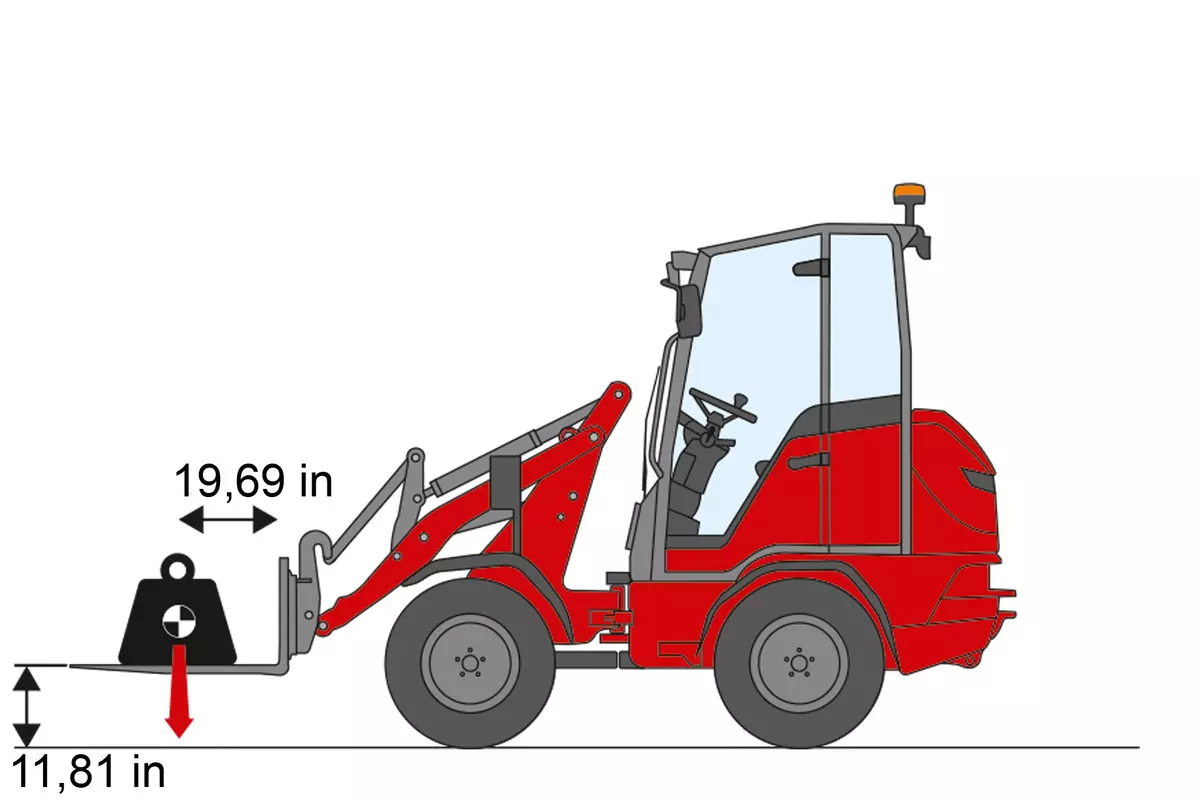
| Tipping load with pallet fork – machine straight, loading frame horizontal | 1,140 - 1,390 kg |
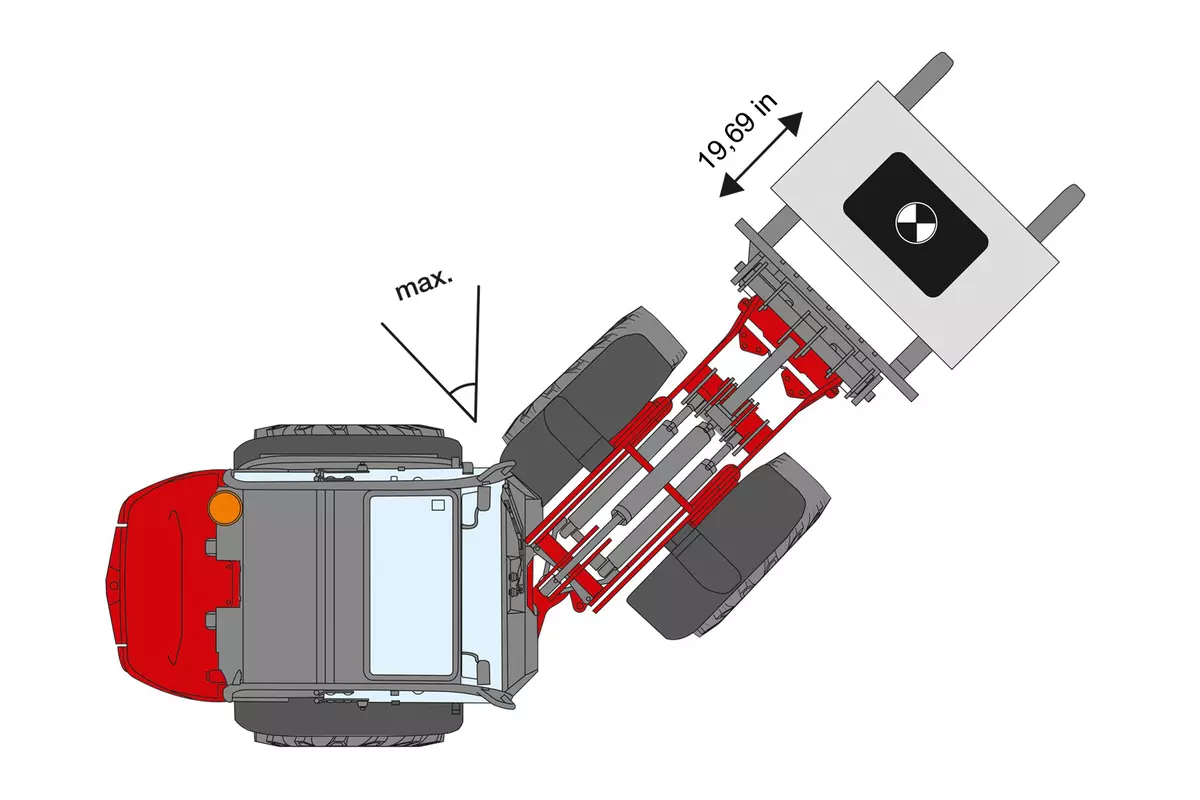
| Tipping load with pallet fork – machine pivoted, loading frame horizontal | 950 - 1,150 kg |
| Tipping load with pallet fork - machine straight, transport position | 1,330 - 1,680 kg |
| Tipping load with pallet fork - machine pivoted, transport position | 1,120 - 1,410 kg |
| Driver's cab | FSD (eps, cabin) |
| Tank capacity for hydraulic oil | 20 l |
| Type of drive | Electrical |
| Drive unit | universal joint shaft |
| Speed levels | 1 |
| Axle | T80 |
| Travel speed Standard | 0-15 km/h |
| Operating brake | Drum brake acting on all four wheels |
| Parking brake | Electrical |
| Work hydraulics discharge volume (max.) | 36 l/min |
| Work hydraulics working pressure (max.) | 225 bar |
| Kinematics type | P |
| Lifting cylinder | 1 |
| Tipping cylinder | 1 |
| Quick change system | hydraulic |
| Steering type | hydraulically activated articulated pendulum steering |
| Steering cylinder | 1 |
| Oscillating angle | ± 10 degree |
| Average sound power level LwA (operator's canopy) | 82.9 dB(A) |
| Guaranteed sound power level LwA (operator's canopy) | 85 dB(A) |
| Specified sound pressure level LpA (operator's canopy) | 68 dB(A) |
| Average sound power level LwA (cabin) | 82.9 dB(A) |
| Guaranteed sound power level LwA (cabin) | 85 dB(A) |
| Specified sound pressure level LpA (cabin) | 70 dB(A) |
|
FSD = operator's canopy Tipping load calculation according to ISO 14397 *The actual battery charging time depends on various factors, in particular the available charging infrastructure, the charging power, the connector used, the ambient temperature, and the condition and temperature of the battery. A limited power supply, unfavorable environmental conditions, or reduced charging power may extend the charging time. The values provided are based on defined test and charging conditions. Variations are possible. Onboard charger 3 kW (standard), with an additional onboard charger for a total of 6 kW (optional). The following charging connectors are available: 230 V / 10 A Schuko, 400 V / 16 A (Type 2 wallbox plug, IEC 62196), and an adapter set with a 230 V / 16 A CEE plug, a 400 V / 16 A CEE plug, and a 230 V / 16 A Schuko plug. **The actual battery runtime depends on operating conditions, the task at hand, operating and driving habits, and other factors such as ambient temperature or battery condition. Operating under heavy loads or at low temperatures can shorten the runtime. The values provided are based on defined, real-world test conditions and are intended as a guide. Deviations may occur in actual use. |
When comparing tipping loads and lift capacities from different manufacturers, make sure that they have been determined in accordance with the ISO 14397-1 and 2 standards!
General Information
Attention: The tipping load changes depending on the various equipment features of a machine (e.g. operator’s platform/cab, rear weight, engine, tires, etc.). The net weight of the various attachments naturally also plays a role here.
Important to note
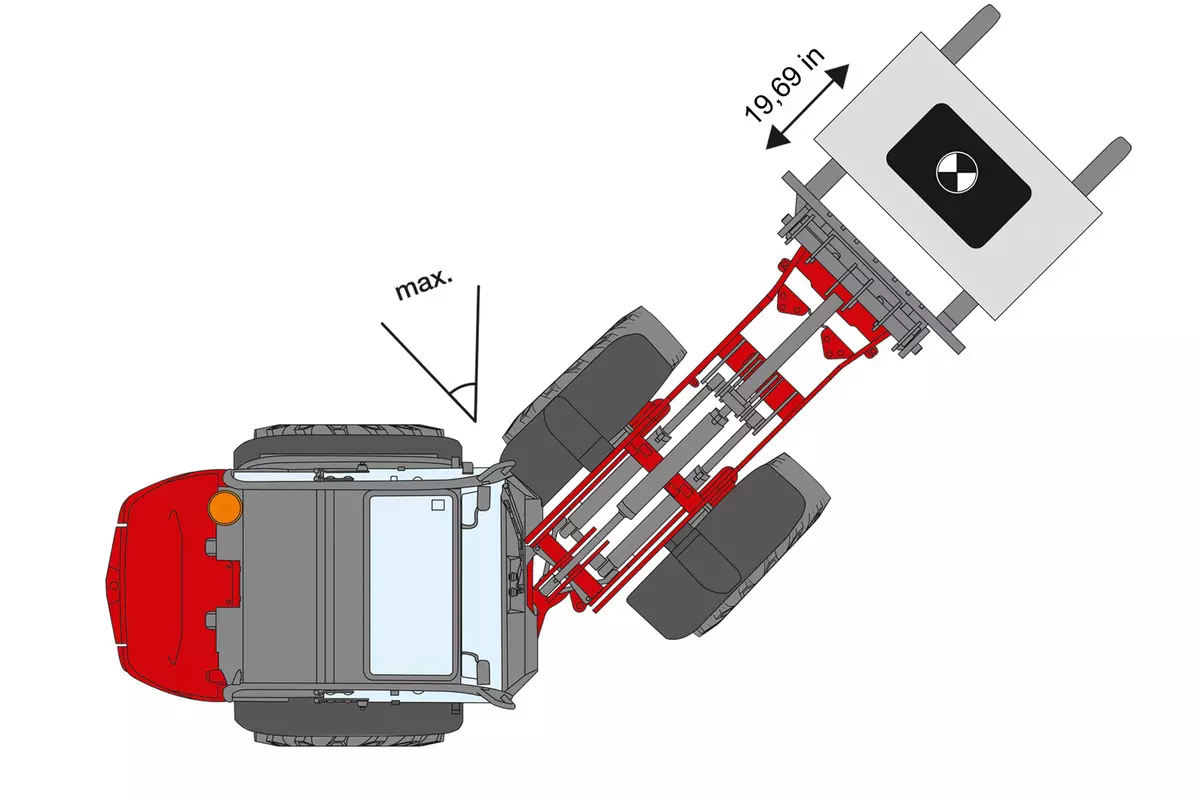
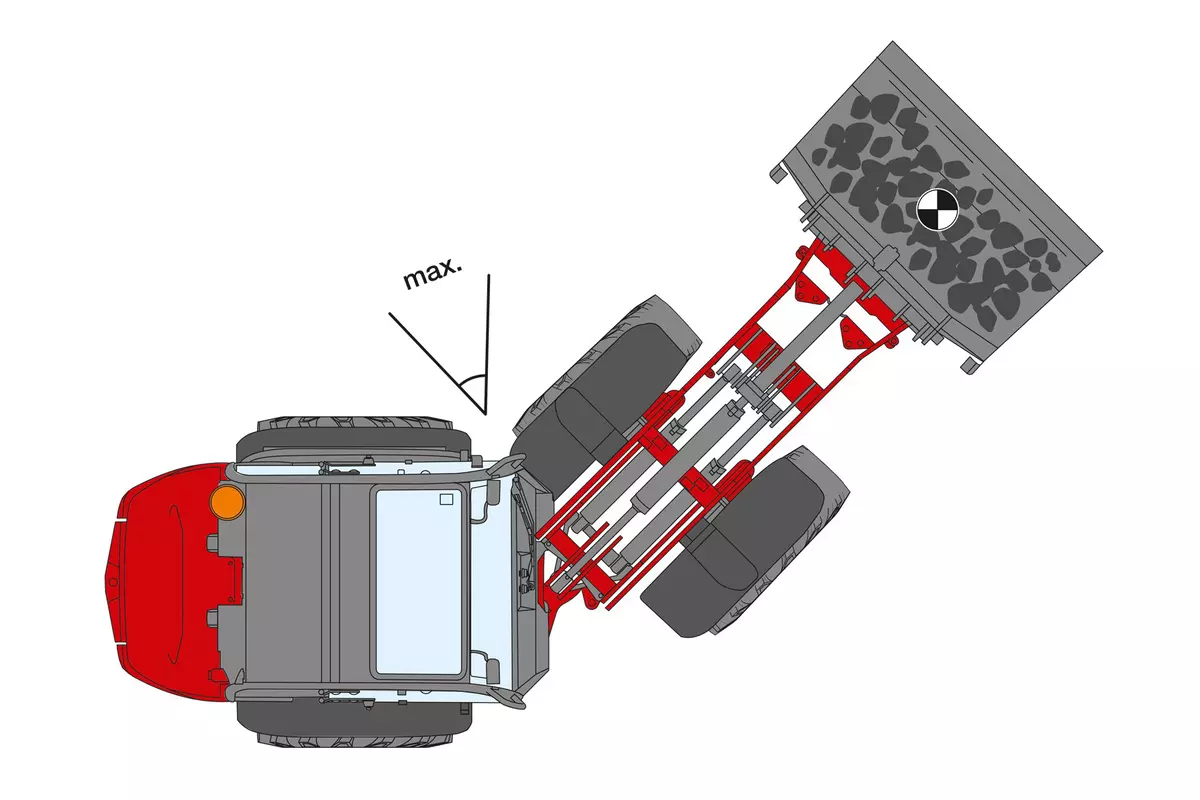
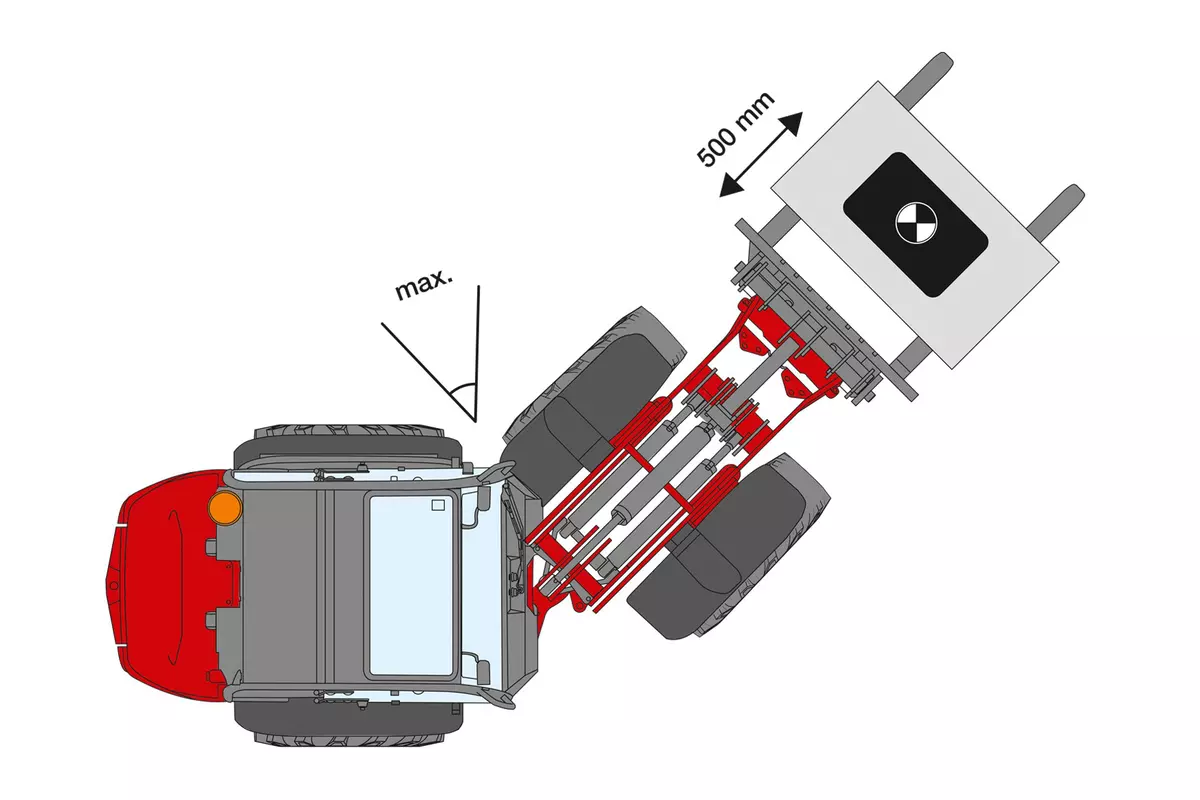
Good to know: Tipping loads determined in the buckled state are highly dependent on the buckling angle of the machine. Weidemann determines these values in the fully folded state. When comparing with other manufacturers, please note the kink angle used!
When comparing tipping loads and lift capacities from different manufacturers, make sure that they have been determined in accordance with the ISO 14397-1 and 2 standards!
General Information
Attention: The tipping load changes depending on the various equipment features of a machine (e.g. operator’s platform/cab, rear weight, engine, tires, etc.). The net weight of the various attachments naturally also plays a role here.
Important to note
Good to know: Tipping loads determined in the buckled state are highly dependent on the buckling angle of the machine. Weidemann determines these values in the fully folded state. When comparing with other manufacturers, please note the kink angle used!
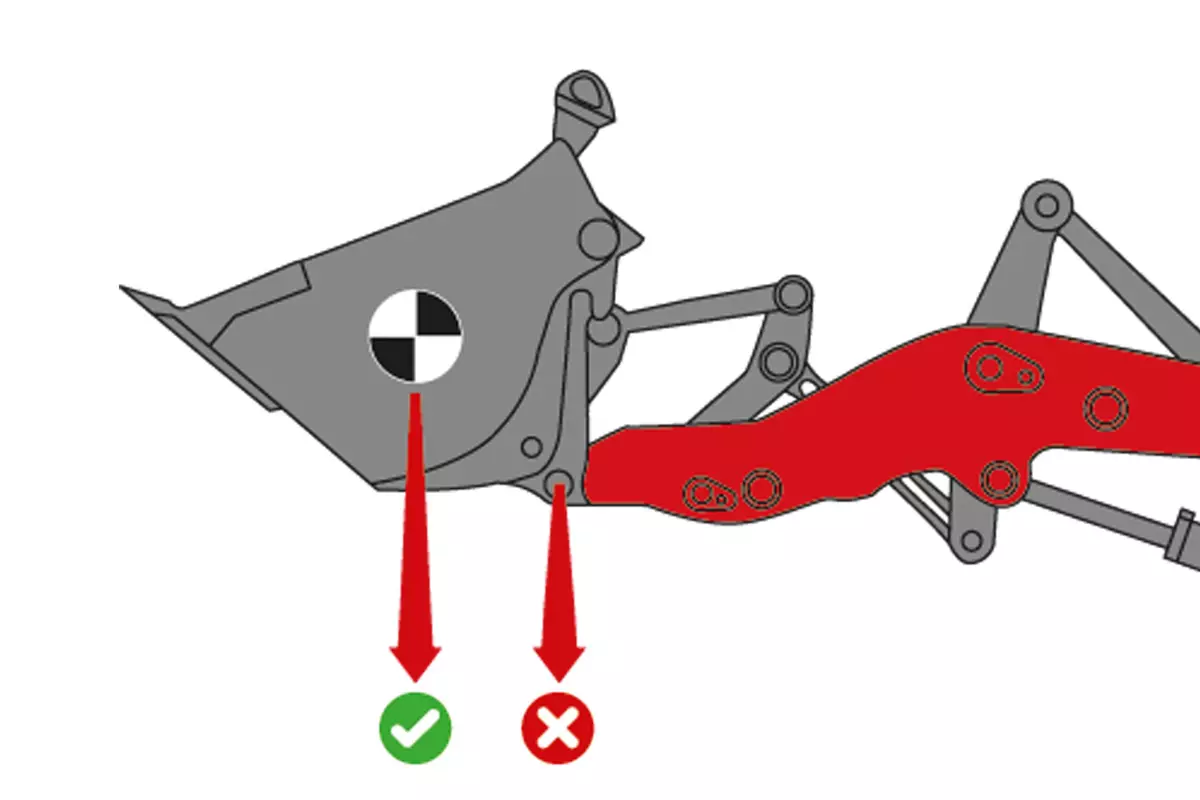
Weidemann determines these values in accordance with the standard at the center of gravity of the bucket – not at the pivot point!
|
|
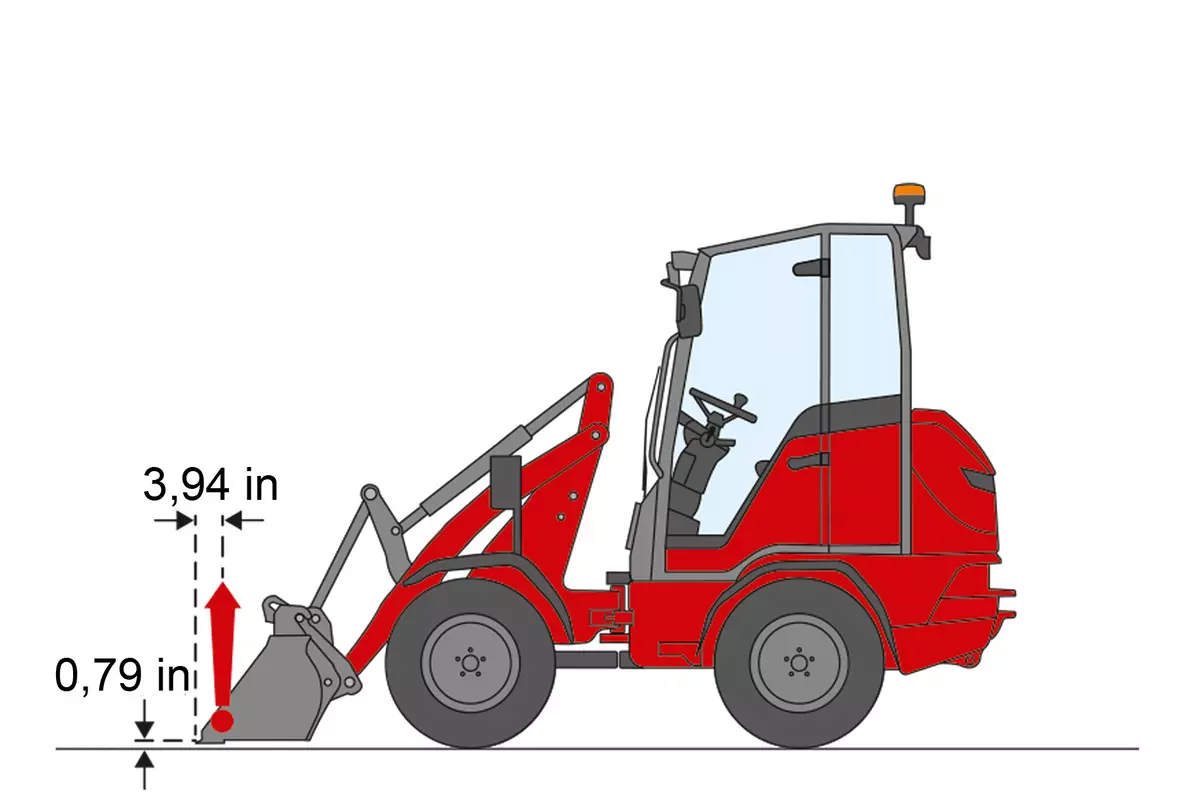
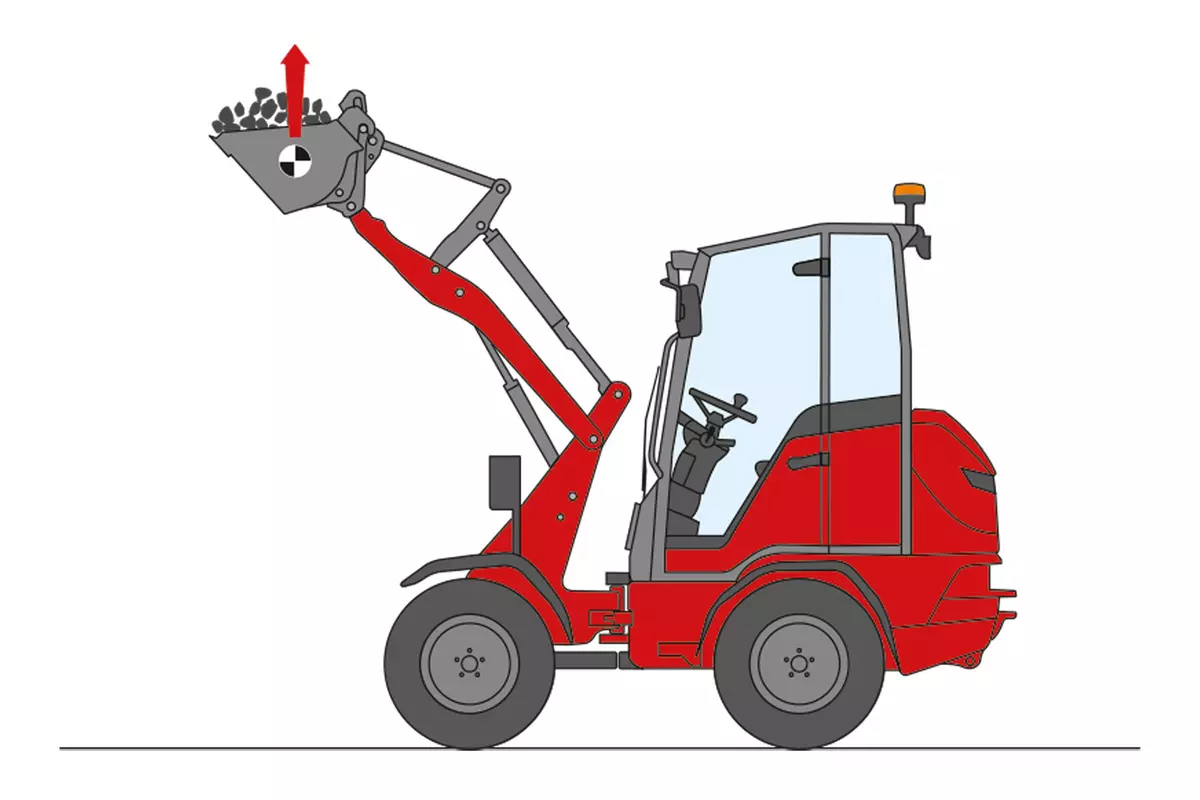
The maximum lift capacity in the bucket’s center of gravity is measured by Weidemann as follows:
|
|
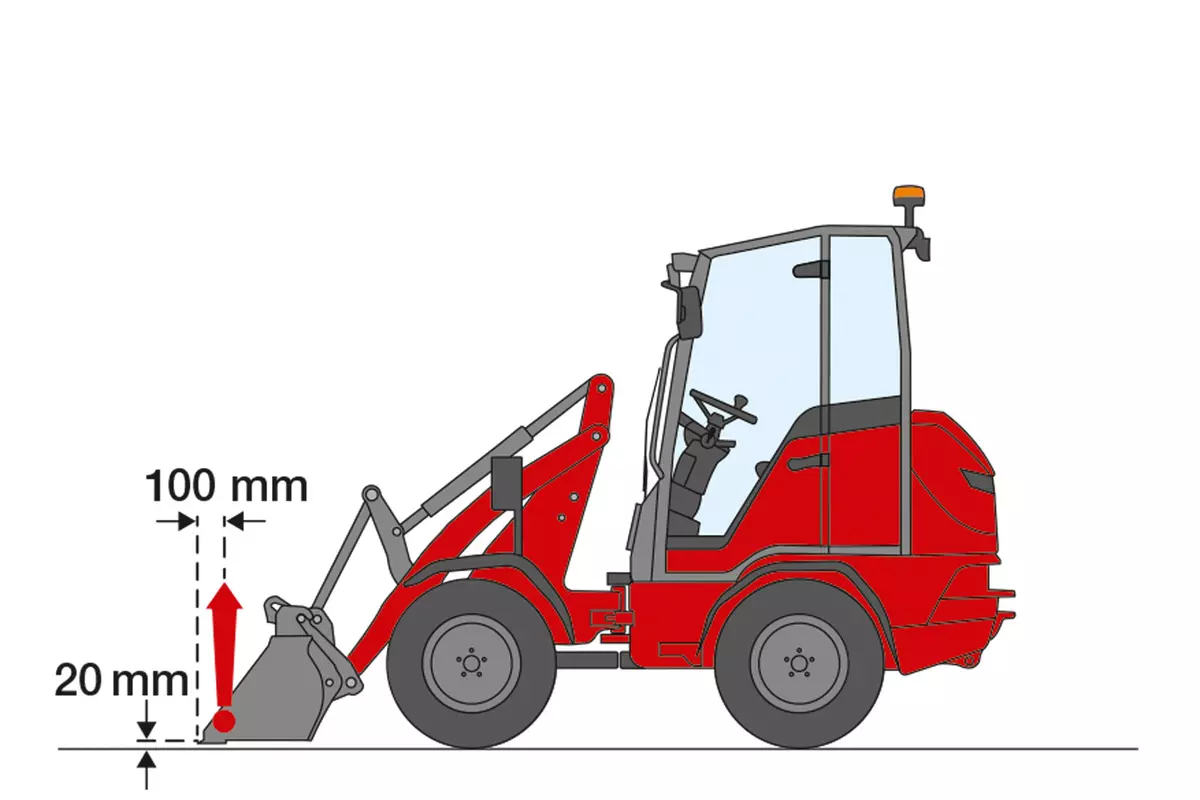
The maximum tear out force on the below bucket edge is measured by Weidemann according to the standard ISO 14397-2, this means:
|
|
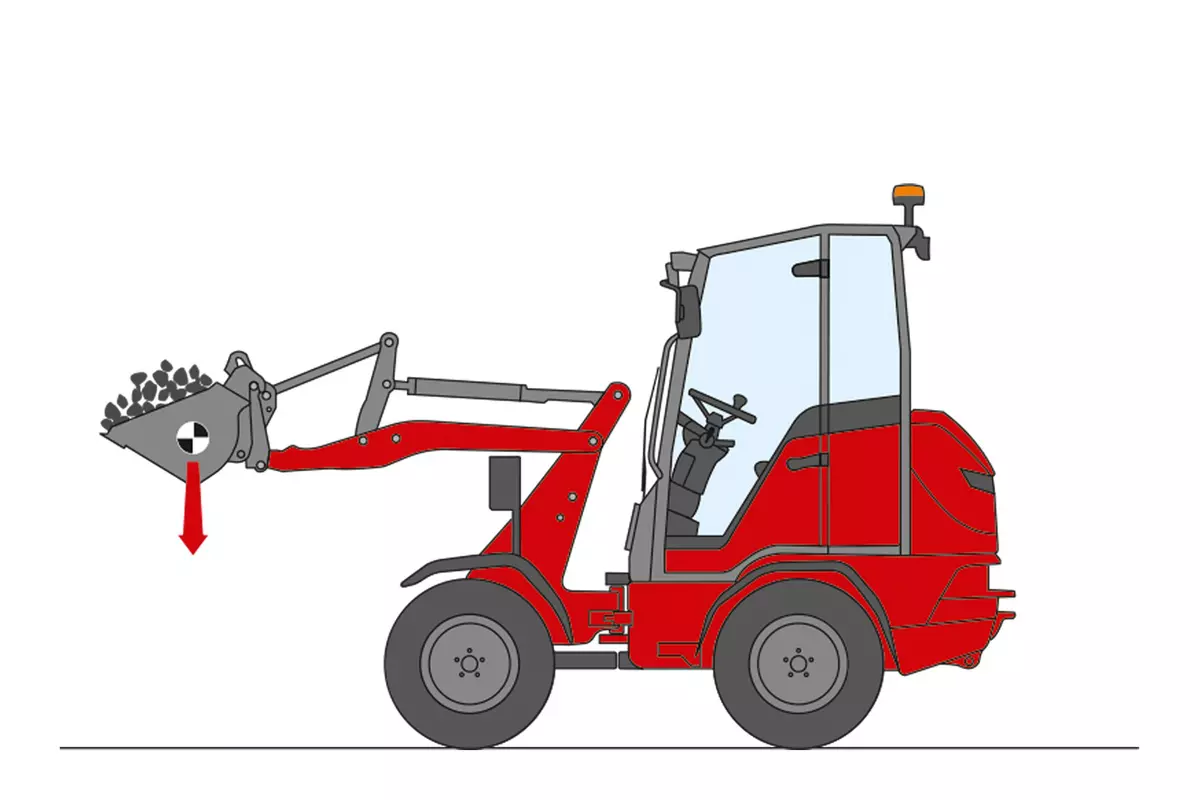
The maximum load weight of a machine is known as the tipping load. This is achieved when the rear wheels of the machine lose contact with the ground. The tipping load is measured by Weidemann according to the standard ISO 14397-1, this means:
|
|
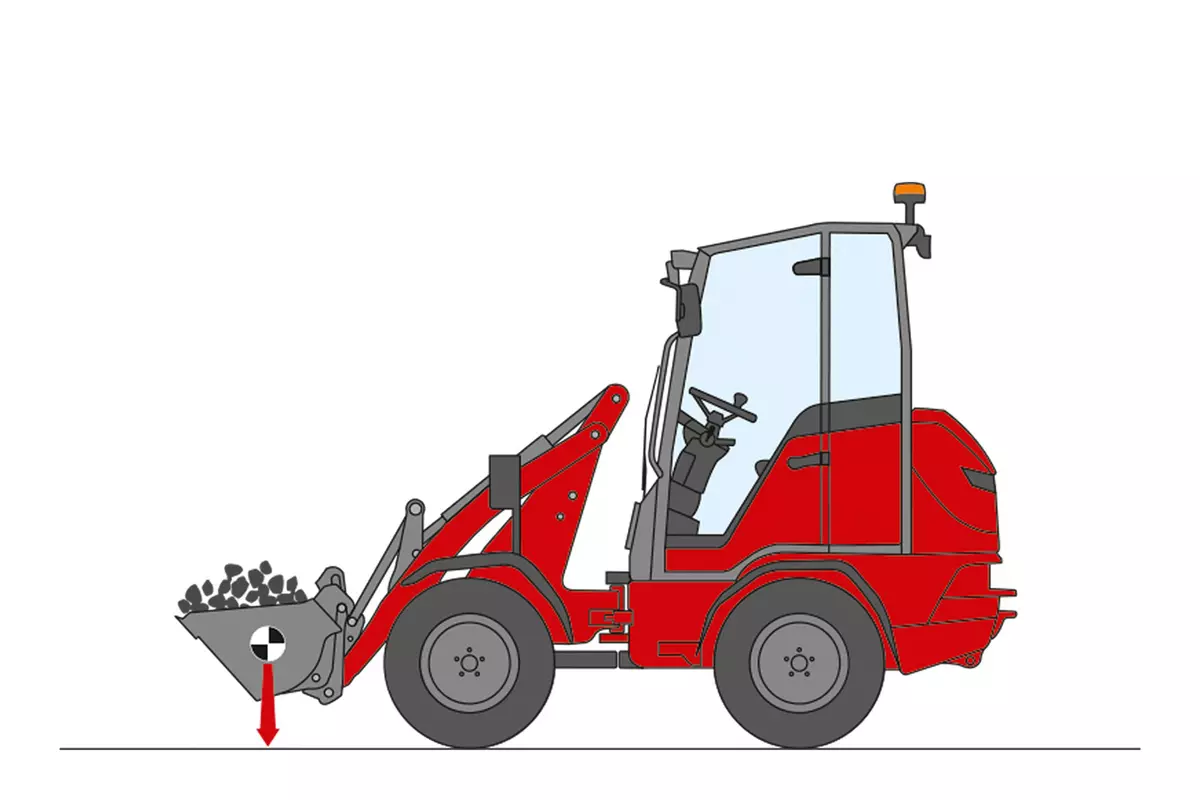
The maximum load weight of a machine is known as the tipping load. This is achieved when the rear wheels of the machine lose contact with the ground. The tipping load in lowest position is measured by Weidemann as follows:
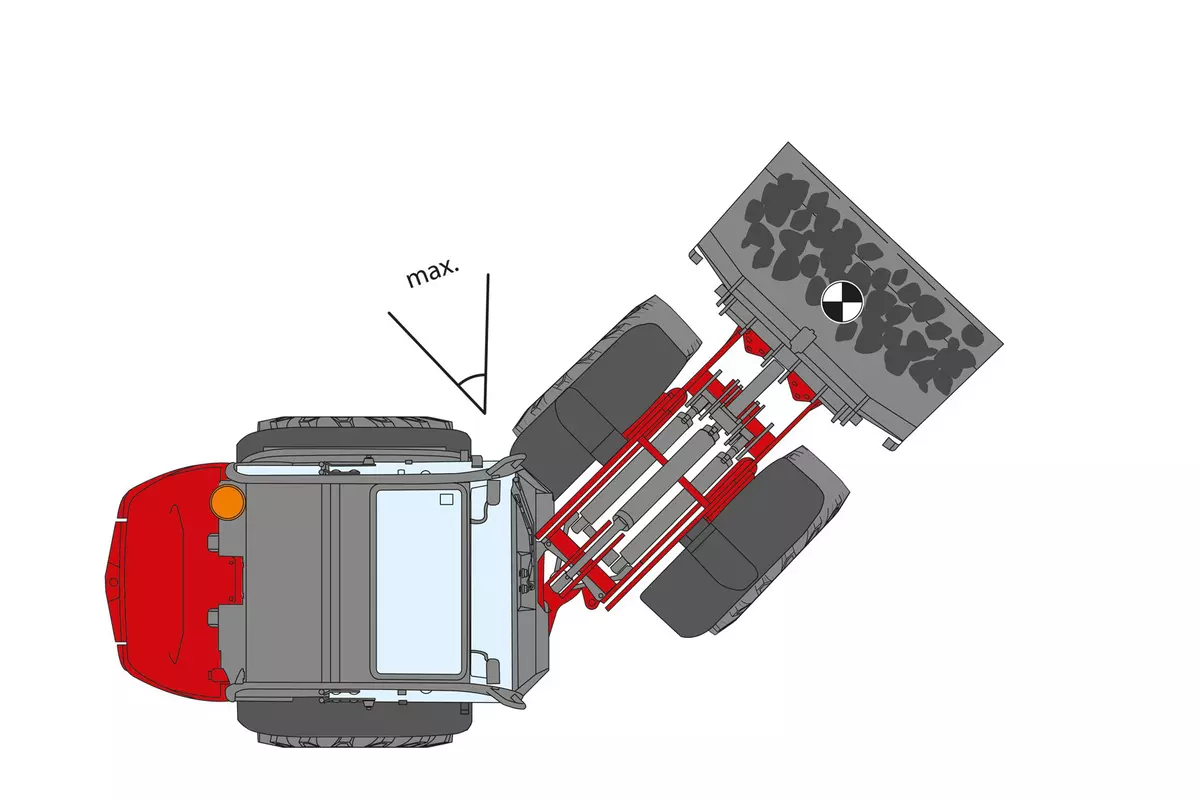
|
|
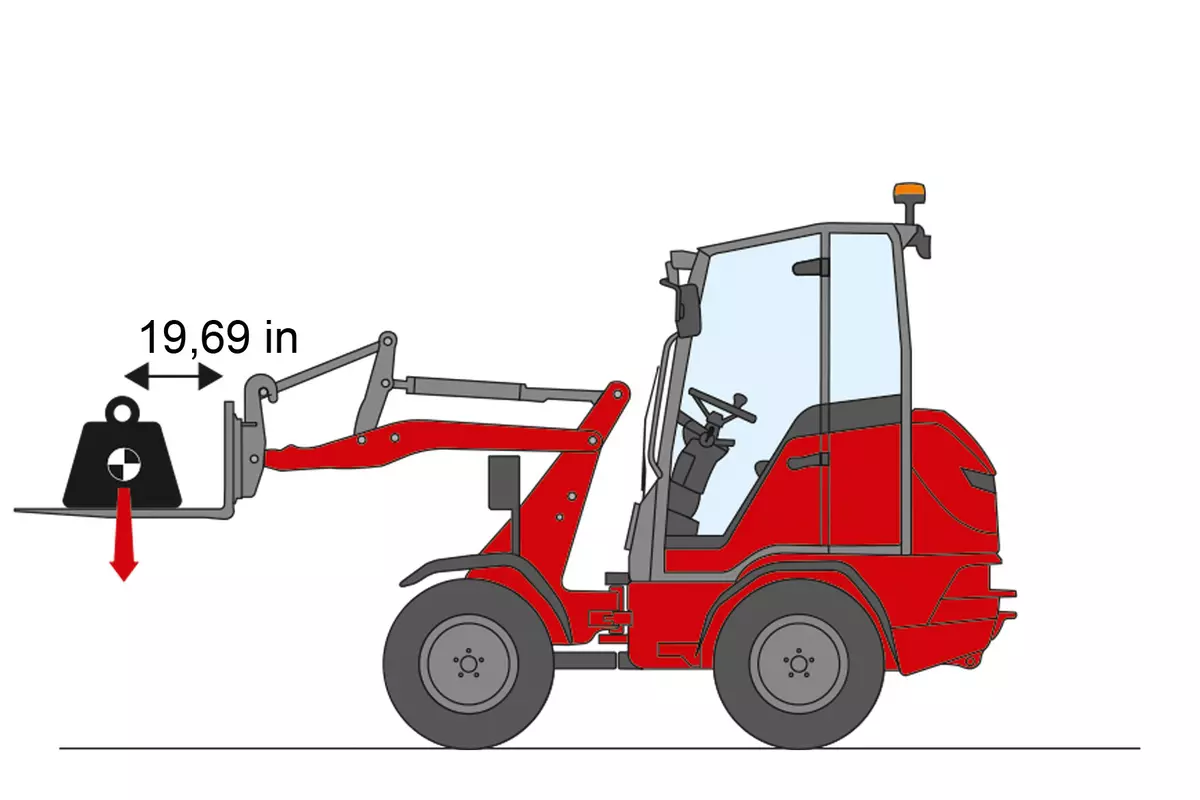
The maximum load weight of a machine is known as the tipping load. This is achieved when the rear wheels of the machine lose contact with the ground. The tipping load is measured by Weidemann according to the standard ISO 14397-1, this means:
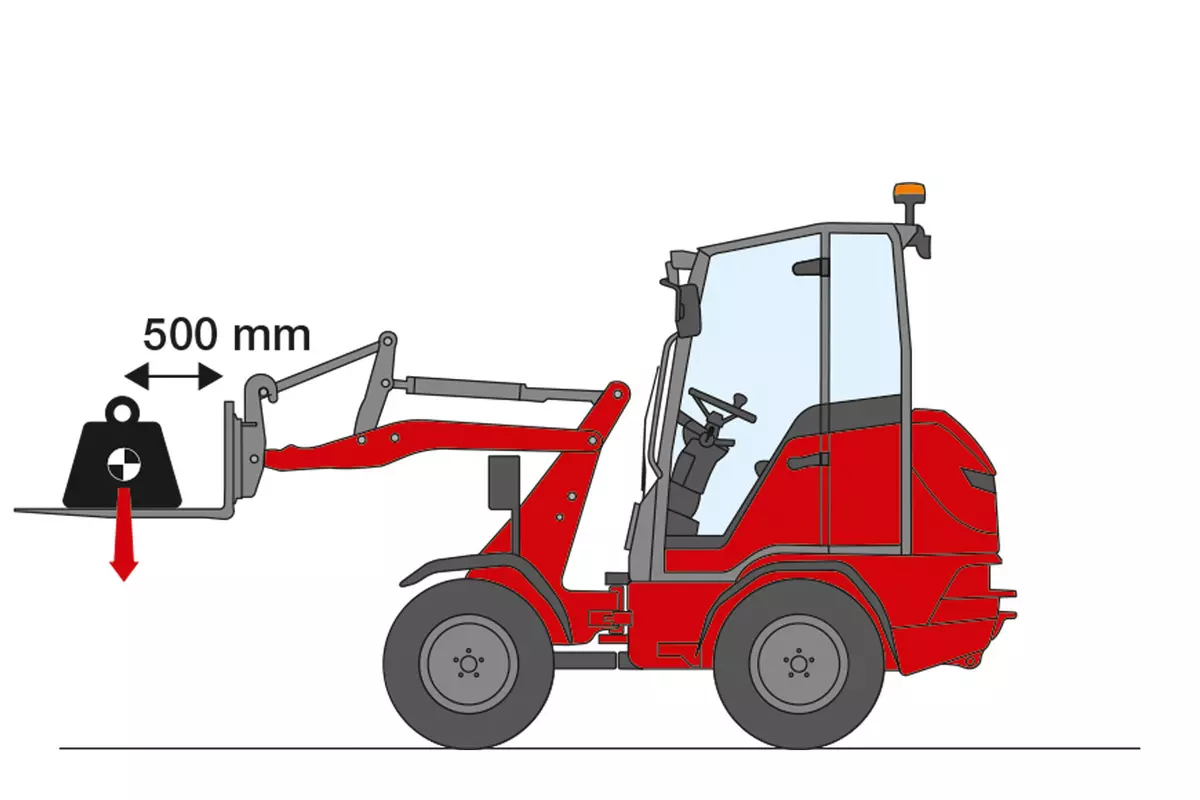
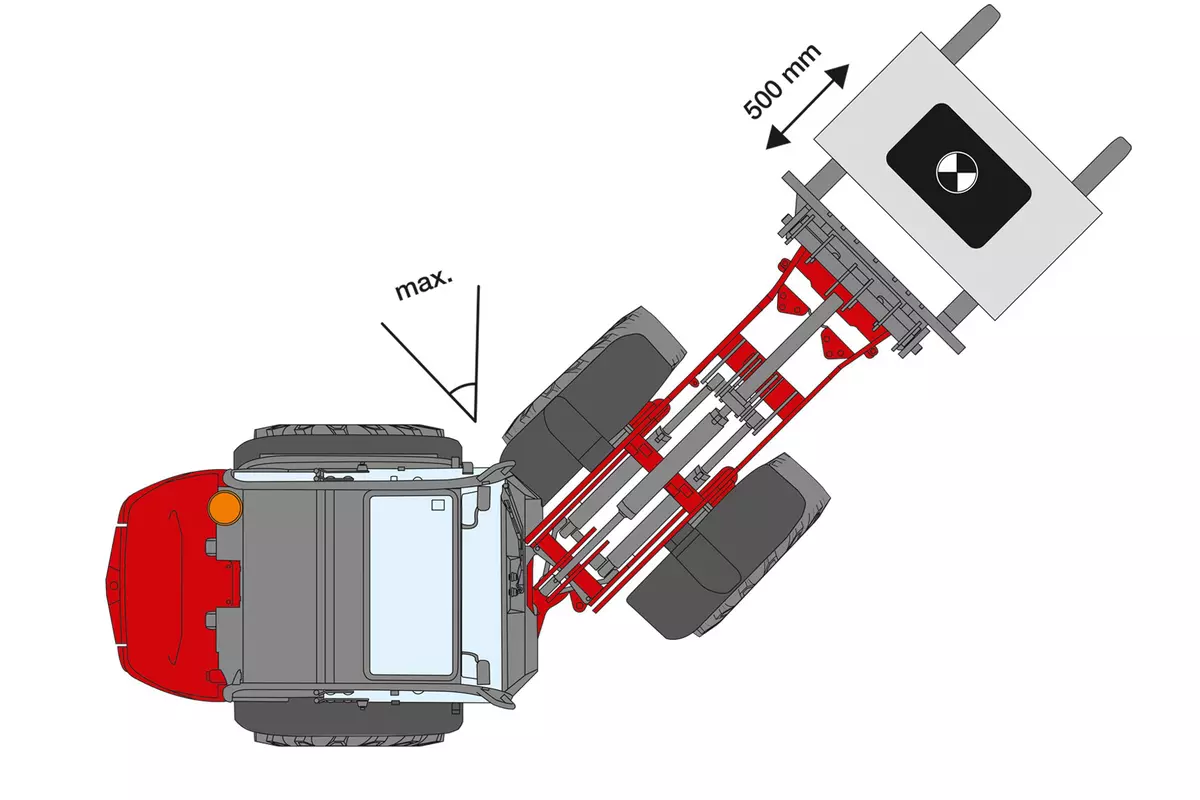
|
|
The maximum load weight of a machine is known as the tipping load. This is achieved when the rear wheels of the machine lose contact with the ground. The tipping load in transport position is measured by Weidemann as follows:
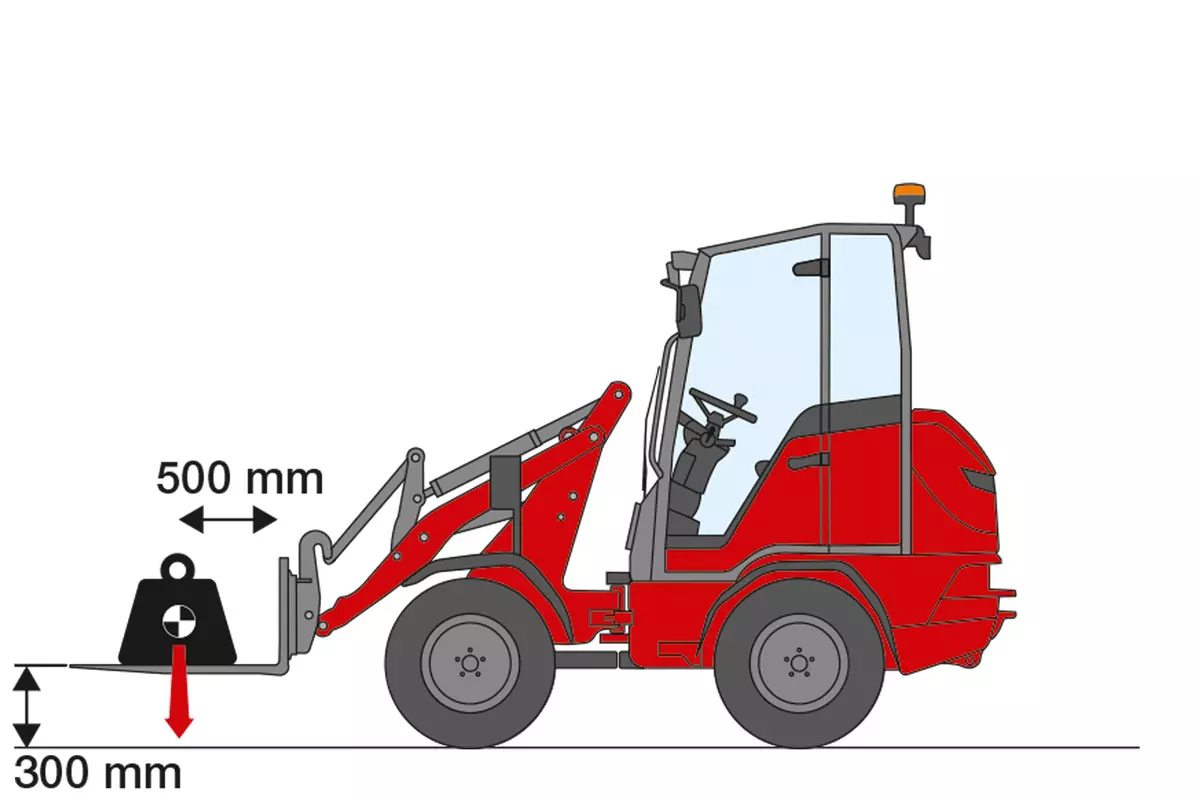
|


